A practical process for private buyers in Austria: RDW and vehicle checks before payment, correct export, safe transport, NoVA, the Austrian vehicle approval database and registration.
Yes, importing a used car from the Netherlands to Austria is feasible for a private individual. Do not pay until the seller’s authority to sell, the physical vehicle identification number (VIN), RDW data, original documents, tax status and transport plan all align. Missing documents, a registration that cannot be transferred or unresolved insurance questions are stop signs.
Before payment: check the vehicle, seller and documents
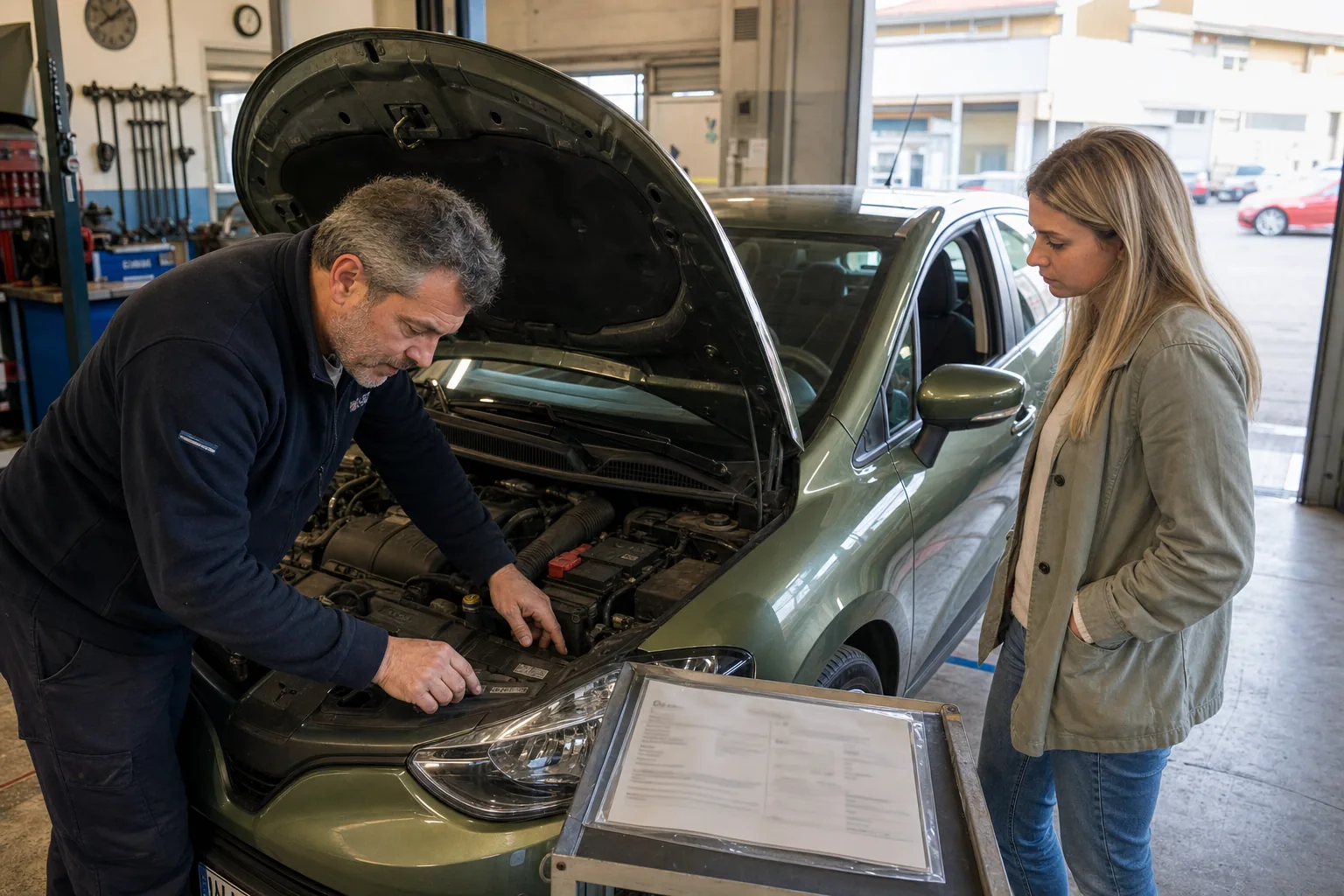
Start with the RDW registration-number check. Check that registration transfer is possible, compare the recorded mileage with maintenance records and match the VIN on the vehicle against the record and registration document. Ask for the complete registration certificate or registration card together with its nine-digit registration code. In a private sale, do not be pressured into rushing, paying in advance or paying cash. 1
The check only shows recorded data. A cloned vehicle identity may go undetected; the result proves neither ownership nor absence of finance, accident-free status or current condition. Therefore check the seller’s ID and authority to sell, the VIN, documents, contract, history and vehicle condition separately. 1
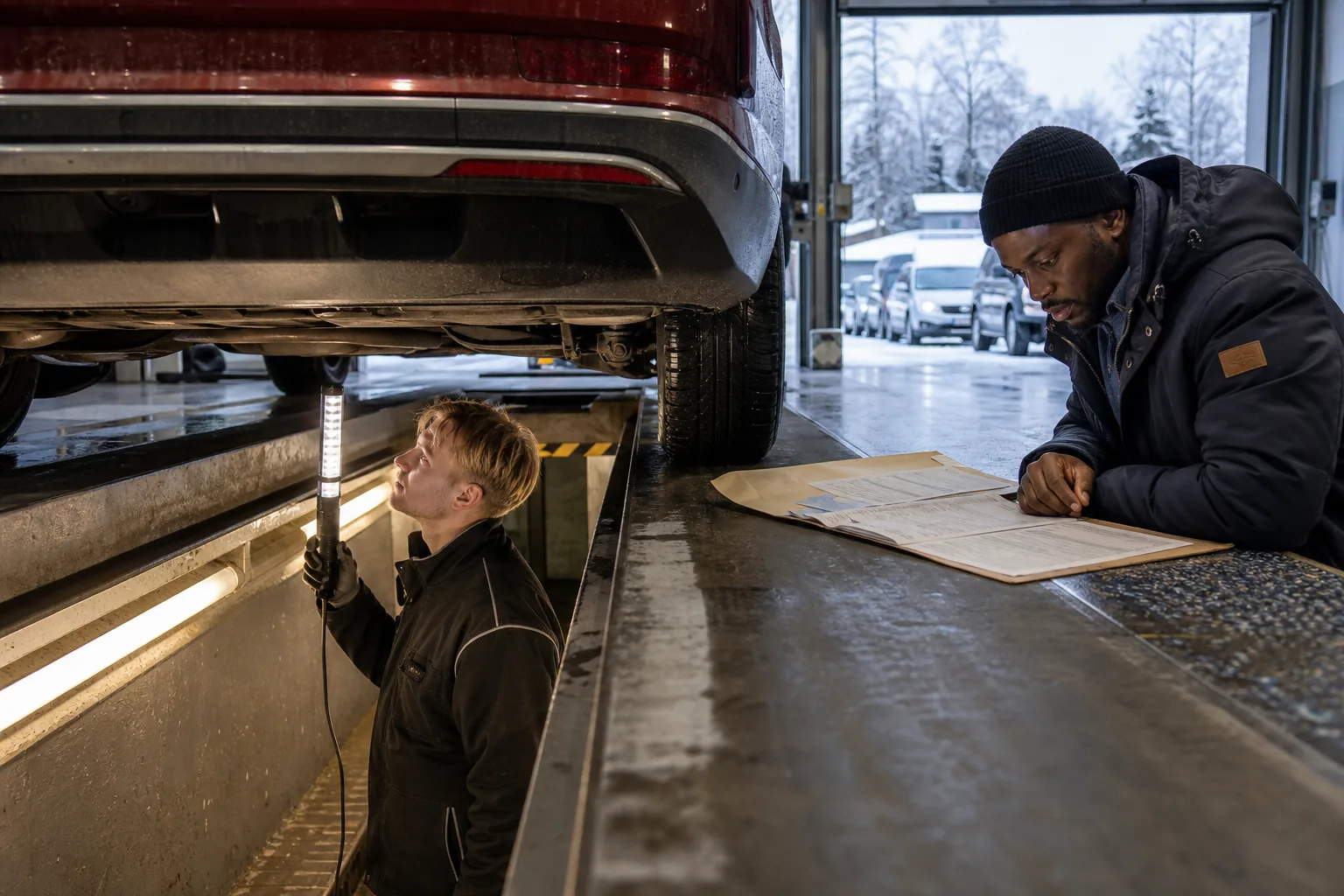
A valid APK is not a pre-purchase inspection. It assesses defined safety, environmental and registration requirements at a point in time; the report lists expiry, rejection, repair and advisory items. It does not provide a complete assessment of maintenance quality, future reliability, ownership or hidden accident damage. 2
| Check | Proceed if | Stop if |
|---|---|---|
| RDW data | Registration transfer is possible; the recorded mileage and data are plausible | Registration cannot be transferred or discrepancies remain unresolved 1 |
| Identity and VIN | The seller’s authority, vehicle VIN and documents match | The identity, authority or VIN cannot be clearly evidenced 1 |
| Original documents | Requirements for the export documents and subsequent registration documents are clear in advance | Deregistration is planned before clarification or without all documents being handed over 3, 4 |
| Vehicle condition | The independent inspection, history and APK present an explainable picture | The APK is expected to replace a condition inspection or accident history 2, 5 |
| Tax and transport | Used status, EU type approval and the transport route are evidenced | NoVA inputs, the approval route or cross-border cover are missing 6, 7, 8 |
Record the parties, VIN, registration number, mileage, price, payment method, known defects, documents, handover and transfer of risk in the purchase contract. Pay by a traceable method and only after completing the checks.
Assign export responsibility correctly and collect all documents
Before deregistration, establish which original documents Austria requires. For a sale abroad, RDW recommends that the buyer export the vehicle in their own name: the buyer then appears on the export certificate and assumes responsibility. If the seller arranges the export, the seller remains responsible until the vehicle is registered abroad. 3
As a rule, export requires valid proof of identity, the registration card with its registration code or paper Part 1B with the Transfer Certificate, and the return of the number plates. A narrow exception applies only where the person already registered as the owner personally deregisters the vehicle at an RDW inspection station or RDW desk: they may do so there without the registration code or Transfer Certificate. This exception is not stated for a buyer not yet registered as the owner or for an authorised export company. 3
Collect the certificate of indemnification, the cancelled registration card or Part 1B, and export certificate Part II. For subsequent registration abroad, the registration card or Part 1B is required together with export certificate Part II; the deregistration exception does not change this. 3
Transport to Austria without number-plate pitfalls
| Option | Requirements | Decision |
|---|---|---|
| Self-drive using a Dutch export arrangement | Export correctly completed, valid APK and insurance; recognition of the plates and cover for every country on the route confirmed in writing | Choose only if all confirmations are in place before collection 3, 8 |
| Carriage on a vehicle transporter | Written quote specifying collection point, destination, insurance, handover record and liability limits | Selected budget option where number-plate recognition remains unclear 8 |
| Austrian temporary transfer plates | 3 to 21 days; EUR 248.60 plus insurance, including a refundable EUR 36.00 deposit | Do not assume this is an automatic solution for collection or transit 9 |
After export deregistration, a passenger car may be driven on Dutch public roads for 14 days using its existing registration number displayed black on white – only with insurance and a valid APK. This proves neither that the plates are recognised in a transit country or Austria nor that insurance covers the driver, period and entire route. Temporary plates are not harmonised across the EU; obtain written confirmation of recognition and cover before collection. Otherwise, using a vehicle carrier is the more robust plan. 3 8
Austrian temporary transfer plates are valid for 3 to 21 days and, as at 13 September 2026, cost EUR 248.60 plus insurance; this includes a EUR 36.00 deposit, refundable if the plates are returned within one year. The Austrian guidance recommends foreign temporary transfer plates for own imports because Austrian plates can cause problems abroad. This option likewise does not replace confirmation for collection and transit. 9
Tax, approval and registration in Austria
Because the vehicle comes from an EU Member State, no customs duty is payable. NoVA, any applicable acquisition VAT, approval, insurance and registration must nevertheless be dealt with separately. 10 6
The vehicle is classified as new if it has no more than 6,000 km or its first use was no more than six months before acquisition. It is used only if it has more than 6,000 km and its first use was more than six months earlier. If your purported used car meets either new-vehicle condition, as an Austrian private individual you generally owe 20% acquisition VAT and NoVA before registration; the foreign VAT treatment depends on the statutory conditions governing intra-Community supplies. 11 6 12
For a genuine used car previously registered in the EU, a private purchase is generally subject to NoVA, but not to the new-vehicle acquisition-VAT branch. As a rule, the NoVA law applicable at the time of first EU registration is relevant together with the vehicle’s change in value; do not apply the current formula indiscriminately. An unusually low private purchase price may have to be substantiated against an Austrian valuation. 6 13
For NoVA 2, an ordinary private purchase requires a purchase contract and a vehicle valuation, such as Eurotax, Autopreisspiegel or a report by a generally sworn expert; do not assume that an exception applies. When buying from an authorised vehicle dealer, the invoice is used instead. Other documents include, in particular, foreign vehicle and approval papers, an extract from the Austrian vehicle approval database and photographic ID. A customs assessment is supporting evidence only for a third-country import and is not relevant to this EU route. Only after the applicable tax has been received does the tax office release the vehicle in the approval database for registration. 12
Every imported vehicle must be entered in the Austrian vehicle approval database before registration. EU type approval usually avoids the need for a new Austrian approval, but not database entry; evidence may include a COC or foreign registration certificate. Without EU type approval, individual vehicle approval and possibly an exemption approval are required. As at 13 September 2026, up to EUR 180.00 was quoted for database entry where a vehicle has EU type approval and approximately EUR 150.00 for individual vehicle approval, depending on the evidence; additional evidence and modifications may cost more. 7
For registration, you need motor third-party liability insurance valid in Austria, proof of identity and approval and, where applicable, both parts of the previous EU registration certificate. If the periodic inspection is due and no result is recorded in the Austrian database, you need a current positive inspection report. Database entry and NoVA clearance are also required for an own import. 4
As a person resident in Austria, you may generally use the imported vehicle on foreign plates for one month from when it is first brought into Austria. A further month is available only if you can credibly show that registration in time was impossible. This extends neither the export plates nor the insurance. 11
Budget without false precision
The plan selects one transport route – a vehicle carrier – and the EU-type-approval case. If the vehicle lacks this approval, replace the database item with an individual authority budget; do not add both branches. There is no total because inputs remain open. Recheck variable fees and quotes before committing. 13 9
| Item | Amount | Condition |
|---|---|---|
| Purchase price | To be determined | Agree the contract price only after checking identity, documents and the vehicle 1 |
| CarAudit standard inspection | EUR 229.00 | Optional; advertised price including VAT and the technician’s travel, as at 13 September 2026; confirm availability 14, 15 |
| Traction-battery diagnostics | EUR 179.00 | Optional for a suitable vehicle; advertised price as at 13 September 2026; confirm availability 14, 15 |
| RDW export transaction | EUR 12.00 | RDW transaction only, as at 13 September 2026; charges from an authorised export business, plates and insurance are not included 3 |
| Vehicle transport to Austria | Request a quote | Selected transport option; confirm the price, transport insurance, handover and liability limits in writing 8, 9 |
| Vehicle valuation for NoVA 2 | Request a quote | For an ordinary private purchase, obtain a valuation such as Eurotax, Autopreisspiegel or a sworn expert’s report 12 |
| Entry in the Austrian vehicle approval database | EUR 180.00 | Selected case with EU type approval; up to this amount as at 13 September 2026 7 |
| Austrian standard consumption tax (NoVA) | To be determined | Enter the first registration, vehicle value, CO₂ or emissions data and the applicable historical legal rules 13, 6 |
| Austrian motor third-party liability insurance | Request a quote | Confirm the premium for the vehicle and registered keeper before registration 4 |
| Current positive inspection report | Request a quote | Only if the periodic inspection is due and no result is recorded in the Austrian database 4 |
| Base passenger-car registration fees | EUR 270.00 | As at 13 September 2026: EUR 178.00 authority share, EUR 65.60 handling, EUR 1.10 ZMR enquiry, EUR 2.30 inspection sticker and EUR 23.00 number plates 4 |
| Registration certificate as a chip card | EUR 31.10 | Optional extra as at 13 September 2026; only if the chip-card version is requested 4 |
| Translations, supporting documents or modifications | To be determined | Budget for these only if requested by the approval authority or Austrian vehicle registration office 7, 4 |
| Acquisition VAT (new-vehicle case only) | To be determined | 20% only if the vehicle has no more than 6,000 km OR its first use was no more than six months before acquisition; establish the tax base and foreign VAT treatment in advance 6, 12 |
Chronological checklist
| Sequence | Task | Result |
|---|---|---|
| 1 | Evidence the date of first use and mileage for classification as new or used | Tax branch documented 11, 6 |
| 2 | Check the RDW record, transferability, mileage and maintenance evidence | Records plausible 1 |
| 3 | Match the seller’s ID and authority, physical VIN and original documents | No unresolved discrepancy 1 |
| 4 | Have the condition independently inspected and finalise the written contract before payment | Risks and handover addressed 2, 1 |
| 5 | Establish the Austrian approval, NoVA and registration documents before deregistration | Document list confirmed 3, 12, 4 |
| 6 | Carry out the export in your name where possible and collect all documents issued | Responsibility and documents clear 3 |
| 7 | Instruct a carrier or obtain written confirmation of number-plate recognition and insurance territory | Transport legally and practically resolved 3, 8 |
| 8 | Present the COC or evidence of approval and arrange the database entry | Database extract available 7 |
| 9 | File NoVA 2 with the contract, valuation and supporting evidence and pay the tax | Database release completed 12 |
| 10 | Provide liability insurance, the inspection report if due and all registration evidence | Apply for registration 4 |
Frequently asked questions
Is customs duty payable when importing from the Netherlands?
No. No customs duty is payable when bringing this vehicle from an EU Member State into Austria. The vehicle-specific NoVA, possible Austrian acquisition VAT in the new-vehicle case, entry in the Austrian vehicle approval database, insurance and registration must nevertheless be dealt with separately. 10, 6
When is the vehicle treated as used for tax purposes?
Only if it has been driven for more than 6,000 km and its first use was more than six months before acquisition. At no more than 6,000 km or no more than six months, it is treated as new; an Austrian private individual then generally owes 20% acquisition VAT and NoVA before registration. 11, 6, 12
Which documents must I take after the RDW export?
In particular, you need the cancelled registration card or Part 1B together with export certificate Part II for subsequent registration abroad; also collect the certificate of indemnification. The exception allowing deregistration without the registration code or Transfer Certificate applies only to the person already registered as the owner at an RDW desk or RDW inspection station and does not remove the need for these issued documents. 3
Does a valid APK replace an independent pre-purchase inspection?
No. The APK is a periodic inspection of specified safety, environmental and registration requirements at a point in time. It does not confirm maintenance quality, future reliability, ownership, a complete accident history or the vehicle’s entire current condition. Also read the rejection, repair and advisory items in the APK report. 2
Can I simply drive all the way to Austria after export?
Not solely on the basis of the Dutch 14-day rule. This permits use on Dutch public roads after export deregistration only with insurance and a valid APK. For transit and Austria, recognition of the specific plates and insurance for the driver, dates and route must be confirmed. The Austrian one-month period likewise does not extend the export plates or cover. 3, 8, 11
What can a CarAudit inspection do before purchase?
Where access, time, weather and a test drive permit, the described inspection can cover history and legal status, bodywork, mechanical systems, diagnostics and a test drive. It is carried out without dismantling and is neither an Austrian § 57a roadworthiness inspection nor import handling, approval, a guarantee or a promise to detect every fault. Availability for the specific inspection must be confirmed before ordering. 5, 15
Pre-purchase condition inspection
As at 13 September 2026, the CarAudit page checked listed the Netherlands within its coverage area. If seller access and the vehicle, location and appointment are confirmed, you can check the current availability of an independent inspection. The advertised prices were EUR 229.00 including VAT and travel, plus an optional EUR 179.00 for traction-battery diagnostics. The report target was within 48 hours after the inspection, excluding weekends and public holidays, and remains subject to access and operational limits. 14, 5, 15
Sources
- Tips for buying a vehicle
- About the Periodic Technical Inspection
- Exporting a vehicle
- Kfz-Zulassung
- CarAudit Austria — Was wir prüfen
- Fahrzeugerwerb aus Mitgliedstaaten der Europäischen Union
- Import von Kfz — Genehmigungsdatenbank und Typisierung
- Buying and leasing a car in another EU country
- Überstellungskennzeichen
- Kfz-Import aus EU-Ländern
- Allgemeines zum Eigenimport von Kfz
- Verfahren bei Fahrzeugimport
- NoVA Steuersatz
- CarAudit Austria — service and order page
- CarAudit-Bedingungen